

52nd Annual Conference:
July 15-17, 2026
Our six subthemes this year are:
Interdisciplinary Partnerships:
Collaboration on the university campus often takes the form of partnerships that link different disciplines. The fact is that disciplinary boundaries are neither fixed nor eternal, and hybrids such as “paleobiology” or “ecological ethics” are becoming more and more frequent. In addition, the complexity of the contemporary problems invites and even requires us to reach across disciplines in the search for answers. What new interdisciplinary partnerships can we imagine, and how can we make existing ones work more smoothly?
Student-Staff Partnerships:
Student participation in both course co-creation and research benefits all concerned. Students are, of course, the experts in their own learning and can thus offer valuable insights into what works and does not work in the classroom. At the same time, framing a productive research question is a skill difficult to acquire without immersion in a “research culture” that can seem mysterious or opaque when viewed from the outside. Student questions and input can prompt academic staff to refine hypotheses or improve research protocols. Given these benefits, what are some of the more promising avenues toward engaging both partners in productive joint action?
Collaboration and Culture Building:
Collaboration creates its own culture—one marked by negotiation and sharing as the participants work to shape a new set of norms and expectations. How do these collaborative cultures take shape? When do they work best? Does collaboration ever inhibit the participants?
Active and Experiential Learning:
Active learning not only promotes deeper understanding but also community. Debating a concept with their neighbors through “peer instruction” or sharing individual research results in class prompts students to connect with one another as they articulate their own thoughts. How can we best use the potential of active learning to help make these connections, and what barriers might we need to overcome?
Creative and Expressive Practices:
The visual arts provide a tool that if properly used, can help students formulate their thoughts and engage in self-reflection. All students in fact profit from are what are commonly called Visual Thinking Strategies (VTS). Asking students to create a picture that represents their self-conception or a video that illustrates some aspect of course content produces an object that can now be shared and discussed with other students, which in turn reinforces understanding and community. How can we best deploy these strategies, and what courses or disciplines have been most receptive to their adoption?
External Partnerships:
Connecting with community projects or employers helps to bridge the learning world of the university with the practical setting where students will apply what they learned after graduation. Participating in such extracurricular activities may also help them to identify areas in which they still need to improve in order to better compete in the job market and participate more productively in society. But not all partnerships are equal, including those that treat the university as a purely vocational school. What external partnerships offer the most promise, as demonstrated by actual experience, and what can we learn from their success?

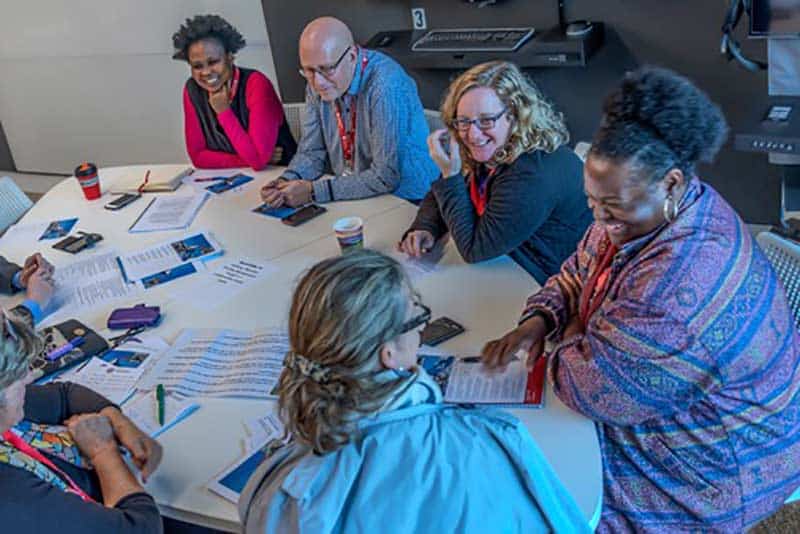
Expect to enjoy:
Sharing tips on resources
Collaborating with colleagues
Virtual and real meetups
Exchanging materials
Asking for advice or help
Innovative strategies
New technologies and methods
Friendly, easy, stress-free networking
Accelerate your growth
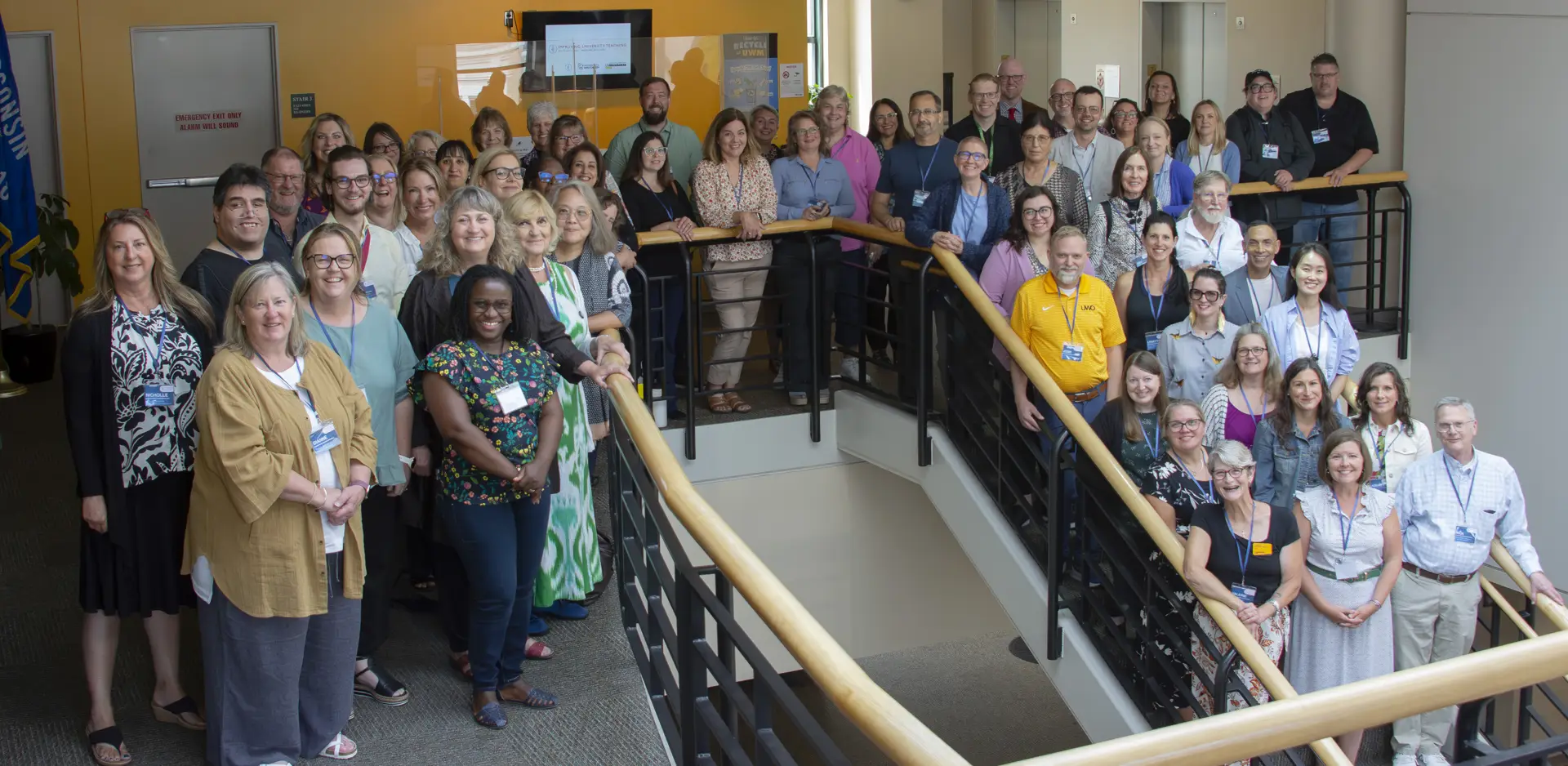
Hello from 2024
A group photo of the Milwaukee attendees at the 2024 conference.